Women’s health at work is moving quickly.
For years, too many organisations have treated it as a narrow wellbeing topic. A menopause policy. An awareness session. A lunch and learn. A passionate employee network doing the heavy lifting without enough structure, budget or authority. That approach is no longer enough. The Renewed Women’s Health Strategy for England, published in April 2026, sets out a ten-year direction for improving women’s health and healthcare, with a focus on prevention, earlier intervention, redesigned pathways, digital tools and care closer to home. At the same time, employer expectations are changing. Employers with 250 or more employees can now voluntarily publish gender pay gap and menopause action plans alongside their gender pay gap data. Subject to legislation, these action plans are expected to become mandatory from spring 2027.
This creates a new moment for women’s health at work. Employers will need to show what they are doing, but the real challenge is not simply producing another plan. The challenge is knowing what good action actually looks like.
This one-day masterclass, led by Amy McKeown, helps delegates move beyond awareness and into practical implementation.
The course explores women’s health across working life, including menstruation, menstrual health, fertility, pregnancy, pregnancy loss, postnatal health, menopause, gynaecological conditions, mental health, caring responsibilities and the wider factors that shape women’s experience of work. It also looks at the organisational reality. Women’s health issues can easily fall between systems. What one person experiences as pain, fatigue, flooding, anxiety, poor sleep, brain fog or recovery may be treated by the workplace as absence, underperformance, poor resilience, conduct, inconvenience or simply ‘not our issue’.
That is where employers need a more joined-up approach.
This masterclass brings together culture, manager capability, occupational health, reasonable adjustments, policy, work design, disclosure, privacy, data, measurement and accountability. It helps delegates understand what is already happening in their organisation, where the gaps are, and what practical steps they can take next.
The aim is not to turn delegates into clinicians. It is to help them build more confident, practical and structured workplace responses to women’s health.
WHAT THE COURSE COVERS
The Renewed Women’s Health Strategy for England and what it means for the workplace context.
Gender pay gap and menopause action plans, including how menopause action planning can sit within a broader women’s health approach.
Women’s health across the life course, including menstruation, menstrual health, fertility, pregnancy, pregnancy loss, postnatal health, menopause and gynaecological conditions.
The women’s health gap, including data gaps, diagnosis delays, access issues and why women’s health has historically been misunderstood, minimised or poorly designed for.
Cycles, body literacy, cognitive load, emotional labour, social conditioning and self-care.
The lived experience of women at work, including culture, stigma, career progression, absence, performance management, discrimination, gender pay and unpaid labour.
The difference between awareness, tactics, action plans and strategy.
How to build a practical women’s health programme, including ownership, senior sponsorship, governance, stakeholder roles and minimum standards.
The role of HR, occupational health, health and safety, line managers, senior leaders, employee networks, reward, benefits and external providers.
Policies and processes that may need review, including menopause, menstruation, fertility, pregnancy loss, absence, performance, flexible working, reasonable adjustments, health and safety, EDI and occupational health pathways.
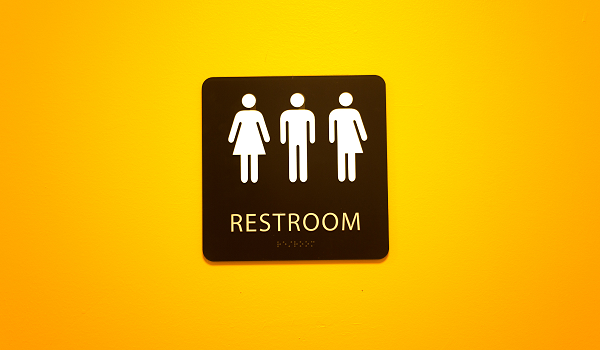
Physical work environment and work design, including uniforms, PPE, toilets, washing facilities, temperature, shift work, fatigue, flexibility, breaks and job demands.
Privacy, disclosure and how to support conversations without forcing women to share more than they need to.
Measurement, baselines, dashboards, KPIs and how to understand whether action is making a difference.
Practical action planning for delegates’ own workplaces.
FACILITATOR
Amy McKeown is an internationally recognised workplace health, mental health and women’s health strategist with more than 22 years’ experience across digital health, corporate strategy, occupational health, leadership and organisational change.
She created and led one of the UK’s first major corporate workplace health, mental health and wellbeing strategies at EY, supporting 13,000 employees across 22 office locations, and has since advised organisations including Samsung UK, Burberry, the EU Parliament, Barloworld and Marel.
Amy is a long-standing advocate for women’s health at work and sits on the ISO committee developing the first international standard for menstruation and menopause in the workplace. Her work helps organisations translate policy, standards, employer expectations and emerging good practice into practical, credible action.
Her approach is deliberately multidisciplinary. She brings together women’s health, occupational health, HR, leadership, culture, psychosocial risk, reasonable adjustments, work design and implementation. In this masterclass, Amy helps employers understand women’s health not as a standalone wellbeing topic, but as a workforce, leadership and organisational issue.