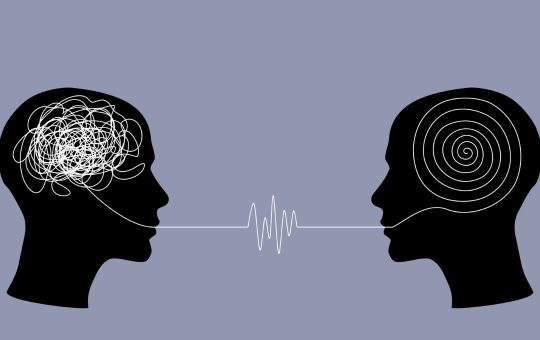
The workplace conversation around neurodiversity has changed considerably. Conditions including ADHD, autism and dyslexia are increasingly recognised and discussed, while employees are becoming more aware of their rights and the support they may be entitled to at work.
For employers, however, greater awareness also brings greater responsibility.
New figures point to a significant rise in employment tribunal activity involving both disability discrimination generally and neurodiversity specifically.
A report by Littler found that the number of employment tribunal cases citing neurodiversity increased by 79%.
The latest Ministry of Justice statistics also show disability discrimination continuing to account for a significant proportion of Employment Tribunal claims. In January to March 2026, disability discrimination represented 16% of jurisdictional complaints received, an increase of three percentage points compared with the same quarter a year earlier.
The statistics do not mean that every employer is suddenly facing greater litigation risk. But they do point towards a workplace issue that HR teams cannot afford to treat as a niche concern
What is driving the increase in neurodiversity-related cases?
There is no single explanation for the rise in tribunal cases.
One factor may simply be greater awareness. Employees are increasingly familiar with concepts such as reasonable adjustments, neurodiversity and disability discrimination. This can make people more likely to recognise when workplace practices are placing them at a disadvantage.
There may also be a growing willingness to disclose conditions that employees previously kept private.
For employers, this creates a changing landscape... An employee who previously struggled silently with communication, concentration, sensory environments or organisational demands may now be more likely to ask for support.
The critical question is what happens next.
If an employer responds appropriately, a potential workplace difficulty can often be resolved through a conversation and practical adjustment.
If concerns are dismissed, adjustments are delayed or an employee's behaviour is treated purely as a performance or conduct issue, the situation can become considerably more serious.
Neurodiversity does not always look the way employers expect
One of the challenges for organisations is that neurodivergent employees may not have an obvious or visible disability. ADHD, autism, dyslexia and dyspraxia can affect people in very different ways.
An employee might experience difficulties with:
- Processing verbal information
- Concentration and maintaining focus
- Organisation and prioritisation
- Time management
- Sensory stimulation
- Written communication
- Social interaction
- Changes to routine
- Working in busy or distracting environments
- Understanding ambiguous instructions
- Managing multiple competing demands
None of these automatically indicates that an employee has a disability. However, where a condition meets the legal definition of disability, employers have obligations under the Equality Act 2010.
This is why managers need to avoid jumping straight from a workplace problem to a conclusion about an employee's attitude, capability or commitment. The issue may require further investigation.
The reasonable adjustments question
Reasonable adjustments are likely to be one of the most important areas for HR teams to get right.
The Equality Act 2010 places a duty on employers to make reasonable adjustments where a disabled employee or job applicant would otherwise be placed at a substantial disadvantage. The adjustment will depend on the individual circumstances.
It might involve changes to working arrangements, equipment, the physical workplace, communication methods or working practices. Government guidance makes clear that adjustments can be practical and relatively straightforward.
For a neurodivergent employee, an adjustment could potentially include:
- Providing written instructions alongside verbal instructions
- Giving additional preparation time before meetings
- Using clearer and more structured communication
- Allowing greater flexibility around working arrangements
- Providing a quieter workspace
- Introducing assistive technology
- Breaking larger tasks into clearer stages
- Adjusting aspects of performance management
- Providing regular management check-ins
- Making changes to working patterns where appropriate
There is no universal neurodiversity adjustment package. The starting point should be the individual employee and the disadvantage they are experiencing.
The danger of treating everyone identically
A common misconception around fairness is that employees should all be managed in exactly the same way. In practice, identical treatment can sometimes create inequality.
Consider an organisation where every employee is expected to receive verbal instructions in meetings and immediately act upon them. For some employees, that may work perfectly well.
For an employee whose disability affects auditory processing or working memory, however, the same process could create a substantial disadvantage. Providing written instructions afterwards does not necessarily give that employee an advantage. It may simply remove a barrier that other employees do not experience.
This is an important distinction for managers.
Reasonable adjustments are not about giving disabled employees preferential treatment. They are about considering whether workplace practices create avoidable disadvantage.
What should employers be doing now?
The rise in neurodiversity-related tribunal cases and the latest official disability discrimination figures should not be viewed simply as a litigation warning. They also reflect a broader change in the employment relationship.
It is not enough for an organisation to say that it supports neurodiversity. Employees need to see that commitment in the way recruitment is conducted, managers are trained, adjustments are implemented and performance concerns are handled.
The strongest approach is proactive rather than reactive. Invest in effective training to give HR professionals and leaders the confidence to recognise potential risks, understand their responsibilities and handle difficult workplace situations before they escalate.
Why not take a look at the forthcoming Supporting Neurodiversity in the Workplace half-day online training led by charismatic employment lawyer Kate Shepherd, who specialises in online employment law training and HR consultancy